The short version
If you know what to do but still are not doing it, the problem is usually not a lack of knowledge.
It is a gap between insight and follow-through.
That gap is influenced by things like energy, attention, emotional resistance, and how a task is structured in the moment.
When you understand what is happening inside that gap, it becomes easier to support action in a way that actually works.
“I already know what I need to do.”
This is one of the most common starting points I hear.
Not confusion.
Not a lack of ideas.
But clarity.
You know what needs to happen.
You have thought it through.
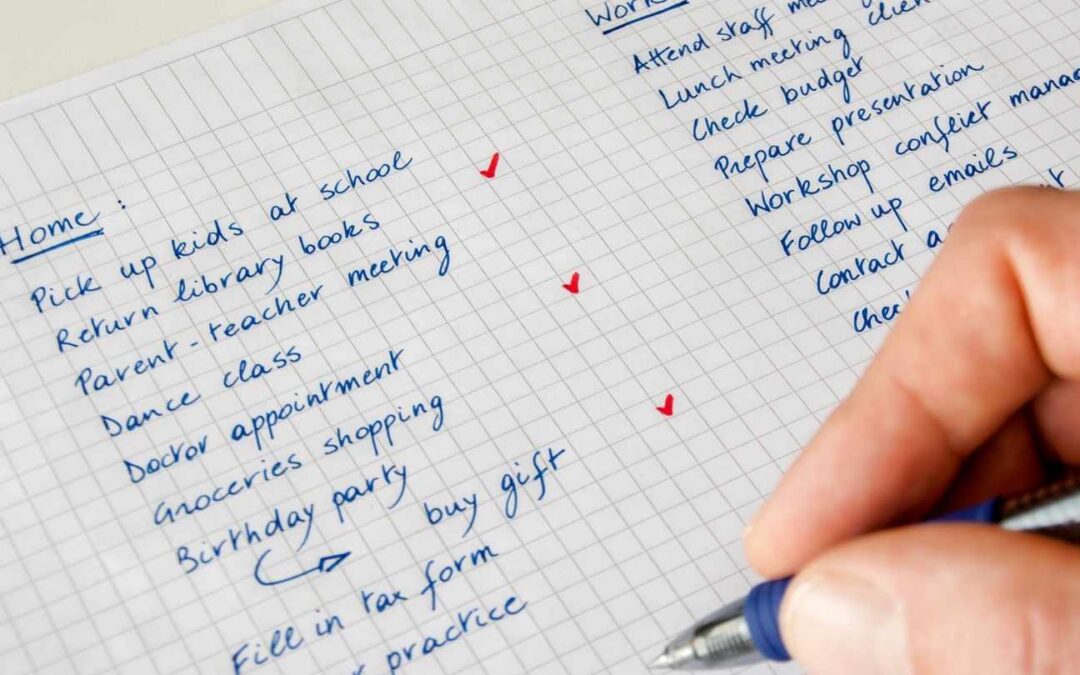
You might even have a plan written down somewhere.
And yet, the action is inconsistent.
You think about doing it.
You intend to do it.
You tell yourself you will do it later.
But when the moment comes, something shifts.
You hesitate.
You do something else first.
You move your attention somewhere easier or more immediate.
And then the day fills up.
Why this feels harder than it should
There is a particular kind of frustration that comes with this pattern.
Because it seems like it should be simple.
If you know what to do, why would you not do it?
That question often turns into self-criticism very quickly.
You might notice thoughts like:
I am procrastinating
I need to be more disciplined
I should just get it done
But those explanations stay at the surface.
They describe what it looks like, not what is actually happening.
The space between knowing and doing
There is a space between understanding something and acting on it.
That space is where most of the difficulty lives.
Knowing is a cognitive process.
Doing is a behavioral one.
And behavior is shaped by more than just knowledge.
It is shaped by your current state, your environment, the structure of the task, and how the task feels in that moment.
This is why insight alone rarely leads to consistent follow-through.
You can understand something clearly and still struggle to act on it.

What this looks like in real life
You sit down and think, I should send that email.
You know what to say.
You have probably already drafted it in your head.
But instead of opening your email, you check something else first.
Maybe you respond to a message.
Maybe you look at your calendar.
Maybe you open a different task that feels easier to start.
It does not feel like a big decision.
It just feels like a small shift.
But that shift is the moment where knowing does not turn into doing.
And those moments happen throughout the day.
Task initiation is not as simple as it sounds
Starting a task is often treated as a basic step.
Just begin.
Just get started.
But task initiation is more complex than that.
It requires your brain to:
- Shift from thinking to action
- Organize what needs to happen first
- Engage with something that may not feel appealing
- Ignore competing inputs pulling your attention elsewhere
If any part of that process is difficult, starting becomes harder.
Even when the task itself is not particularly complicated.
The role of friction
One of the most useful ways to understand this gap is through the idea of friction.
Friction is anything that makes it harder to start or continue a task.
It is often subtle and easy to overlook.
It might be:
- Not having a clear first step
- Needing to open multiple tools or tabs
- Uncertainty about how long something will take
- Not having everything you need in one place
- Feeling unsure about how to do something well

None of these are major obstacles on their own.
But they add up.
And when friction increases, action slows down.
Why the same task feels different on different days
You might notice that sometimes you can do something easily, and other times the exact same task feels impossible to start.
That inconsistency can feel confusing.
But it is usually not about the task.
It is about your state.
Your energy level.
Your mental load.
Your environment.
What else is already on your mind.
When those factors support the task, starting feels natural.
When they do not, the task feels heavier.
This is why telling yourself to “just do it” often does not work.
Because it ignores everything influencing that moment.
Emotional resistance is part of this
Not all friction is practical.
Some of it is emotional.
You might notice a subtle sense of pressure.
You want to do the task well.
You want it to turn out a certain way.
You do not want to make a mistake or miss something.
Even if you are not consciously thinking those things, they can shape how the task feels.
And when a task feels loaded, it becomes harder to approach.
This is especially true for tasks that matter to you.
Why doing something else feels easier
When you shift away from a task you intended to do, it is usually not random.
You are moving toward something that feels easier to engage with in that moment.
Something that:
- Requires less setup
- Feels more familiar
- Provides quicker feedback
- Does not carry the same level of pressure
This is not a failure of willpower.
It is your brain responding to the relative ease of different options.
A more useful question
Instead of asking, why am I not doing this?
It can be more helpful to ask, what is making this hard to start right now?
That question changes the focus.
It moves you away from judgment and toward observation.
And it gives you something you can actually work with.
Supporting the moment of starting
If the difficulty is in the transition from knowing to doing, then that is where support needs to go.
Not at the level of big goals.
Not at the level of long-term planning.
But at the level of the next step.
What would make it easier to begin this right now
Sometimes that means making the first step more specific.
Instead of thinking about the entire task, you define exactly where to start.
Sometimes it means reducing what is required to get going.
Opening the document instead of finishing the project.
Writing one sentence instead of completing the whole thing.
Sometimes it means changing the conditions around you.
- Reducing distractions.
- Setting a short window of time.
- Giving yourself a clear starting point.
These are small adjustments.
But they directly affect your ability to move into action.

When the task feels bigger than it is
There are times when the task itself is not objectively large, but it feels that way.
That feeling alone can create hesitation.
Your brain is not responding to the size of the task.
It is responding to how the task is being represented in that moment.
If it feels like a full, complete, finished product is required, starting becomes harder.
When you narrow the focus to a smaller entry point, the task often becomes more approachable.
Why pressure tends to backfire
When something is not getting done, it is natural to increase pressure.
You remind yourself that it matters.
You try to push yourself to follow through.
But pressure changes the experience of the task.
It can make it feel heavier.
More demanding.
More difficult to approach.
And that often increases avoidance instead of reducing it.
What helps instead of pressure
Support tends to be more effective than pressure.
Support means adjusting the conditions around the task so that action is easier.
It might mean:
Clarifying the first step
Reducing the scope of what you are starting
Creating a defined time to begin
Using some form of external accountability
Setting up your environment ahead of time
These are not dramatic changes.
But they directly address the gap between knowing and doing.
What to notice as you go
As you move through your day, there are small moments where this pattern shows up.
You think about doing something.
You intend to do it.
And then you do something else.
Those moments are easy to miss.
But they are where the pattern lives.
Instead of judging them, try observing them.
What made it harder to start in that moment
What felt easier to do instead
What might have helped you begin
Over time, those observations build awareness.
And awareness creates options.
Focused body doubling sessions inside the Focus Lab
A different way to understand this pattern
If you know what to do and it is still not happening, that is not a sign that something is wrong with you.
It is a sign that something in the system is not supporting action in that moment.
Instead of trying to force follow-through, try getting more curious about what is happening right before action would begin.
And see what changes when you support that moment, instead of pushing past it.
FAQs
Why do I know what to do but still not do it?
Because action depends on more than knowledge.
It depends on your current state, the structure of the task, and the level of friction involved in starting.
Is this procrastination or something else?
It can look like procrastination.
But it is often more helpful to think of it as a mismatch between the task and the support available in that moment.
How do I get better at starting tasks?
Focus on the beginning.
Make the first step clear and small.
Reduce friction where you can.
Create a defined entry point into the task.
Why am I inconsistent if I know what works?
Because your ability to act changes based on your state.
What works in one moment may not work in another without adjustment.
What should I do when I feel stuck?
Pause and identify what is making it hard to start.
Then adjust that part of the process rather than pushing harder.
Executive Functioning and ADHD Coaching
I'm an ADHD and executive function coach and a certified organizational specialist, trained in Solution-Focused Brief Therapy and the Seeing My Time executive functioning curriculum. For five years I worked as a speech-language pathologist in adult medical rehabilitation, providing cognitive communication therapy. That background is what I bring to coaching.
Coaching happens online, which most of my clients prefer for the convenience and the privacy. Wherever you are, we can work together.
All services provided by Suzy Carbrey LLC are coaching, not clinical evaluation or treatment. I am a licensed speech-language pathologist, and that background shapes how I coach, but coaching is not speech therapy. If you're looking for a formal evaluation or treatment, let me know and I can refer you to a qualified clinician.
Great information shared.. really enjoyed reading this post thank you author for sharing this post .. appreciated
I like the efforts you have put in this, regards for all the great content.
I very delighted to find this internet site on bing, just what I was searching for as well saved to fav