

The short version
When people feel overwhelmed, the instinct is usually to try harder, organize better, or find a new system.
But often the real solution is not doing more efficiently.
It’s doing less.
Simplify, eliminate, and delegate are not just productivity strategies. They are ways to reduce cognitive load, support executive functioning, and make follow-through more realistic for overwhelmed adults.
If everything feels hard to keep up with, the issue may not be discipline.
It may be volume.
When everything feels equally important
There’s a specific kind of overwhelm that shows up for many adults, especially professionals and parents.
You sit down to figure out what to do next, and everything feels like it matters.
Work tasks. Emails. Household responsibilities. Things you said yes to last week. Things you meant to get to but haven’t touched yet.
Nothing stands out as clearly optional.
So instead of choosing, you hesitate.
Or you pick something small just to get moving. Or you scroll. Or you reorganize your list again.
Not because you don’t care.
Because your brain is trying to sort through too much at once.
This is where most productivity advice falls short. It focuses on prioritizing better, managing time better, or organizing better.
But prioritizing a long, competing list is not a simple task.
It’s a high-demand executive functioning skill.
And when you’re already overwhelmed, it becomes much harder to access.
Why more structure doesn’t always solve overwhelm
When things feel out of control, it’s natural to reach for more structure.
A new planner. A new app. A more detailed system.
Sometimes that helps.
But sometimes it adds another layer of decision-making.
More categories. More color coding. More steps to maintain the system itself.
If your productivity system requires constant updating, reorganizing, or rethinking, it can quietly increase the mental load it was meant to reduce.
This is where many overwhelmed adults get stuck.
It looks like a time management issue.
But it’s often a capacity issue.
There is simply too much to hold, track, and act on.
And no amount of organizing changes the total volume.
The executive functioning layer
This is where simplify, eliminate, and delegate become more than productivity advice.
They become a way to support executive functioning directly.
Executive functioning includes the mental processes that help you:
start tasks, prioritize, manage time, shift attention, and follow through.
When the number of tasks increases, the demand on these systems increases too.
More tasks mean more decisions. More decisions mean more cognitive load. More cognitive load leads to slower starting, more avoidance, and increased overwhelm.
For adults with ADHD, this load can build quickly. But you do not need ADHD to experience this. Executive functioning challenges show up for many adults, especially during busy or high-demand seasons.
At a certain point, the problem is not how you’re managing your time.
It’s how much your brain is being asked to manage.
Simplifying reduces decision load
Simplifying is often misunderstood.
It’s not about doing things in a basic or careless way.
It’s about reducing unnecessary complexity so your brain has fewer decisions to make.

That might look like repeating the same meals during the week instead of deciding every night. It might mean using one planning system instead of switching between multiple tools. It might mean creating consistent routines instead of trying to optimize every part of your day.
Each simplification removes a small decision.
And those decisions add up.
When you simplify, you reduce decision fatigue without needing more discipline.
Elimination reduces overwhelm at the source
Simplifying changes how you do things.
Eliminating changes how much you do.
This is where real relief often comes from.
Most adults resist elimination because everything on their list feels reasonable.
And it probably is.
But reasonable does not always mean sustainable.
When everything is kept, everything competes.
And when everything competes, your brain has to constantly evaluate what matters most.
That ongoing evaluation is exhausting.
Eliminating even a few things reduces that pressure immediately.
Not forever. Not permanently.
But enough to create space.
Delegation reduces cognitive load, not just time
Delegation is often framed as saving time.
But it also reduces cognitive load.
When you delegate something, you’re not just removing the task itself.
You’re removing:
- the need to remember it
- the need to plan it
- the need to initiate it
- the need to follow through on it
That’s a significant reduction in executive functioning demand.
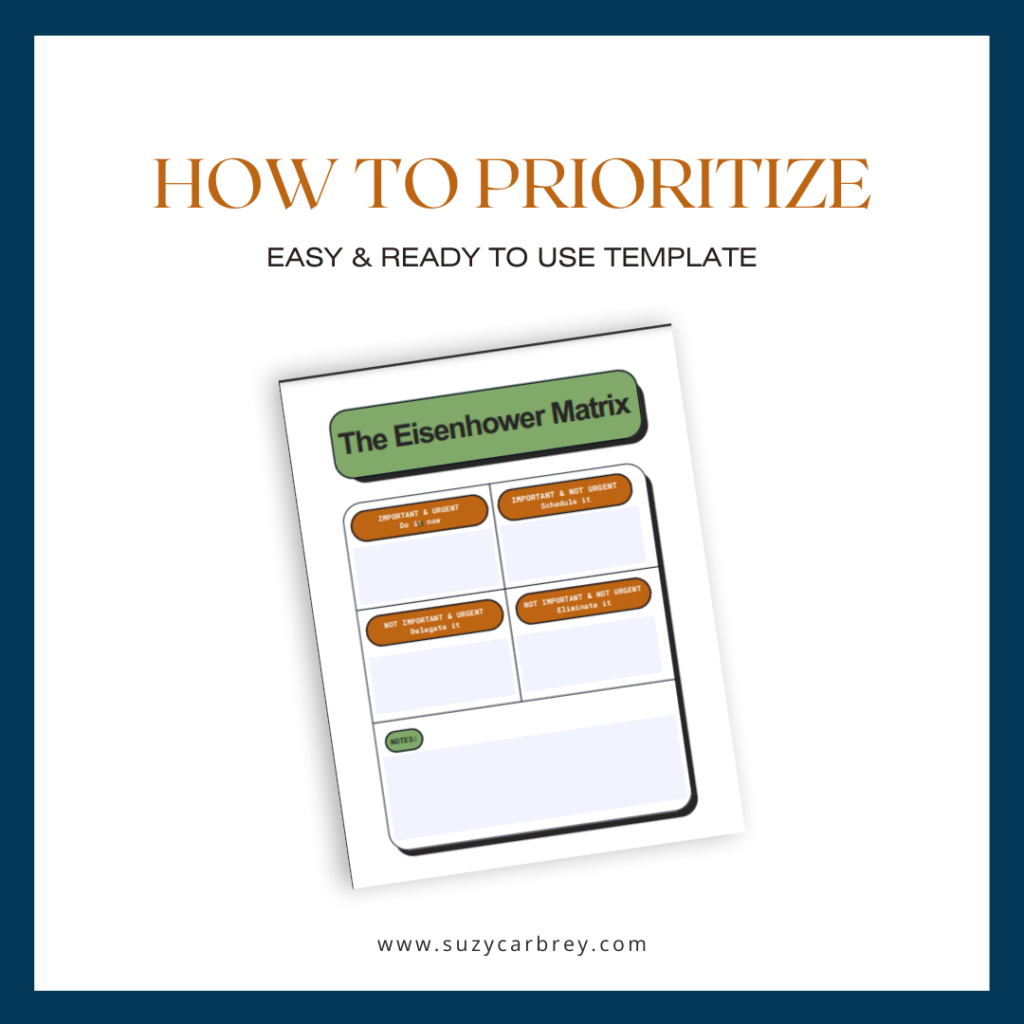
Delegation can happen at work, at home, or through outsourcing.
It might look like sharing responsibilities, asking for help, or deciding something does not have to be done by you.
For many overwhelmed adults, this is one of the most underused strategies.
Why this feels harder than it sounds
Simplify, eliminate, and delegate are conceptually simple.
But they can feel uncomfortable in practice.
Simplifying can feel like you’re missing something.
Eliminating can feel like falling behind or letting people down.
Delegating can feel like asking too much or losing control.
These reactions make sense.
Because these decisions are not just practical.
They’re tied to expectations, identity, and long-standing habits.
Which is why this is not just a productivity strategy.
It’s a shift in how you relate to your time and capacity.
The connection to decision fatigue

If you’ve experienced decision fatigue, this is where everything connects.
The more tasks you carry, the more decisions your brain has to make throughout the day.
What to start. What to respond to. What to delay. What to ignore.
Each of those decisions uses cognitive energy.
Simplifying reduces the number of decisions.
Eliminating removes them entirely.
Delegating transfers them.
All three directly reduce decision fatigue.
And when decision fatigue decreases, it becomes easier to start, prioritize, and follow through.
A real-life example
Imagine the end of a typical day.
You still need to respond to messages, figure out dinner, follow up on something you forgot, and prepare for tomorrow.
Individually, none of these tasks are overwhelming.
Together, they are.
If dinner is already decided, one decision disappears.
If fewer emails actually require a response, another disappears.
If one responsibility is shared, another disappears.
The workload may not change dramatically.
But the number of decisions does.
And that changes how your brain experiences the evening.
This is not about doing less forever
There can be a fear that simplifying, eliminating, or delegating means giving things up long term.
It doesn’t.
Capacity changes.
Some seasons allow for more.
Others require less.
This approach is not about lowering your standards.
It’s about adjusting your expectations to match your current capacity.
The role of support
It can be difficult to see clearly what to simplify or eliminate when you’re inside the overwhelm.
Everything feels necessary.
This is where support can help.
Coaching can help you identify where your load is coming from and what can realistically shift. Structured support, like planning sessions or shared work time, can reduce the pressure of figuring it out alone.
Sometimes the hardest part is not knowing what to do.
It’s deciding what not to do.
Focused Shared Work sessions & group coaching inside the Focus Lab
Where to begin
If everything feels like too much right now, start by looking at what you are currently holding.
Not everything you could do.
What you are actively trying to keep up with.
Then gently ask:
What can be simplified?
What can be removed, even temporarily?
What doesn’t have to be done by me?
You don’t need to solve everything.
Reducing even a small part of the load can create enough space to move again.
FAQs
What does simplify, eliminate, delegate mean?
It’s a productivity approach that reduces overwhelm by making tasks easier, removing unnecessary ones, and sharing responsibility.
Why do I feel overwhelmed even when I’m organized?
Because organization does not reduce volume. If there are too many tasks, the cognitive load remains high.
Is this helpful for ADHD?
Yes. Reducing tasks and decisions supports executive functioning. Many adults experience this, not just those with ADHD.
How do I know what to eliminate?
Focus on what is not essential right now. Temporary reduction is often enough to create relief.
What if I feel guilty doing less or delegating?
That’s common. But doing everything yourself has a cost. Simplifying and delegating protect your capacity so you can follow through on what matters.
Executive Functioning and ADHD Coaching
I'm an ADHD and executive function coach and a certified organizational specialist, trained in Solution-Focused Brief Therapy and the Seeing My Time executive functioning curriculum. For five years I worked as a speech-language pathologist in adult medical rehabilitation, providing cognitive communication therapy. That background is what I bring to coaching.
Coaching happens online, which most of my clients prefer for the convenience and the privacy. Wherever you are, we can work together.
All services provided by Suzy Carbrey LLC are coaching, not clinical evaluation or treatment. I am a licensed speech-language pathologist, and that background shapes how I coach, but coaching is not speech therapy. If you're looking for a formal evaluation or treatment, let me know and I can refer you to a qualified clinician.