
The short version
When people feel buried, they usually look at the list and decide they need to get through it faster. A better system, a tighter routine, more discipline.
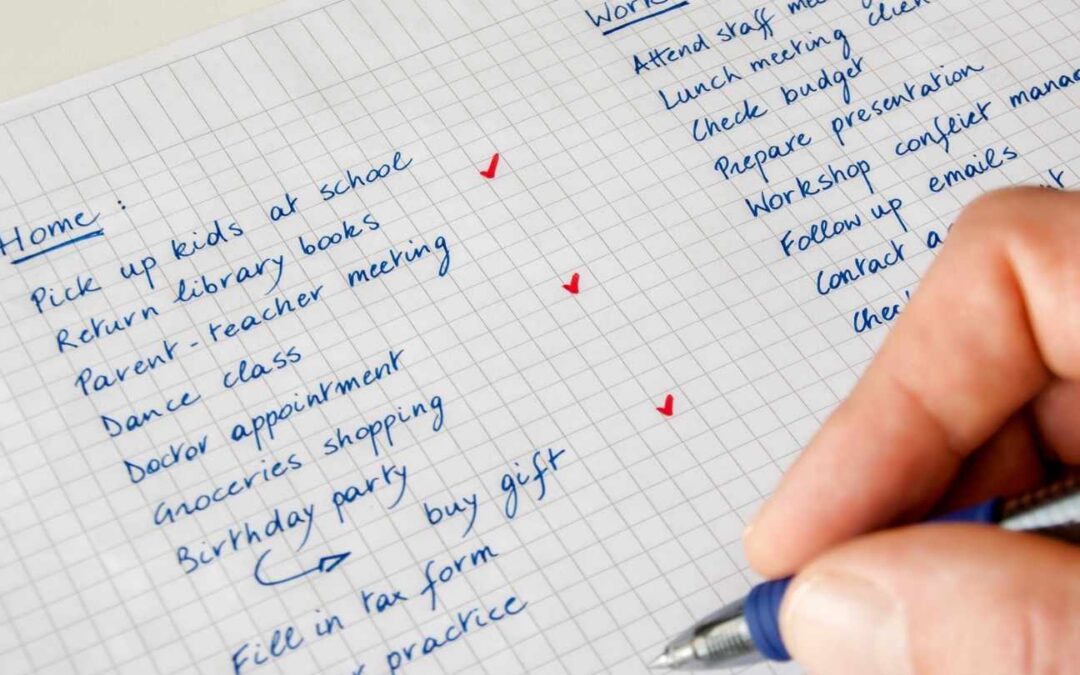
But for a lot of overwhelmed adults, the list itself is part of the problem. A list with thirty items on it isn’t just a record of what’s left. It’s something you have to look at, process, and feel responsible for every single time it crosses your field of vision, whether or not you do a thing on it.
That’s a cost most people never count. The work is one load. The list is a second one sitting right on top of it, and the longer the list, the heavier that second load gets.
The list is doing more to you than tracking tasks
A to-do list is supposed to lower your mental load. You write things down so you can stop holding them in your head. That’s the whole promise of it.
The trouble is that a long list quietly breaks that promise. Once it grows past what you can realistically finish, it stops being a tool that holds things for you and becomes a running picture of everything you haven’t done. Every time you open it, your brain doesn’t just read the three tasks you plan to tackle today. It takes in all thirty. You notice them, weigh them, and feel responsible for them, and that happens in the background every time, all at once.
So you can look at your list, do nothing on it, close it, and still walk away more tired than before. The list charged you for the visit. Most people never connect that drained feeling to the list, because the list is supposed to be the solution. It rarely occurs to them that it might also be a source of the weight.
Why a long list leaves you feeling defeated
Here’s the part I see most with clients. A big, overwhelming list doesn’t just sit there neutrally. It tells you a story about yourself, and the story is that you’re behind.
Open a list of thirty things and the message you absorb is “look at everything you haven’t done.” Cross off two and the remaining twenty-eight are still right there, louder than the two you finished. The list is built so that finishing things barely registers and falling short is always in view. Day after day, that lands people in a defeated place. And defeat is the worst possible starting point, because momentum and motivation are built out of feeling like you’re getting somewhere. When the list is engineered to make you feel like you never are, it doesn’t just fail to help. It actively makes the next step harder to take.
This is why “just be more disciplined about your list” so often backfires. The discipline isn’t the missing piece. The list is structured in a way that drains motivation faster than effort can replace it.
Not everything on the list belongs in front of you
A lot of adults run on an unspoken rule that if something made it onto the list, it has to stay there, in view, until it’s done. So everything piles into one place: the email, the doctor’s appointment, the garage, the someday project, the major work deadline, all sitting side by side with equal weight.
But those things don’t all need your attention today, and keeping them all visible doesn’t get them done any faster. It just means you carry all of them at once, all the time. The fix isn’t tracking everything more carefully. It’s getting most of it out of your line of sight so the few things that matter today can actually be seen.
Give everything else a later place to live
One of the first things I set up with clients who feel buried is a second list. Call it a later list, a place to capture everything that isn’t relevant right now. The thought still gets written down, so you don’t lose it and you don’t have to keep holding it in your head, but it doesn’t sit in front of you demanding attention it doesn’t need today.
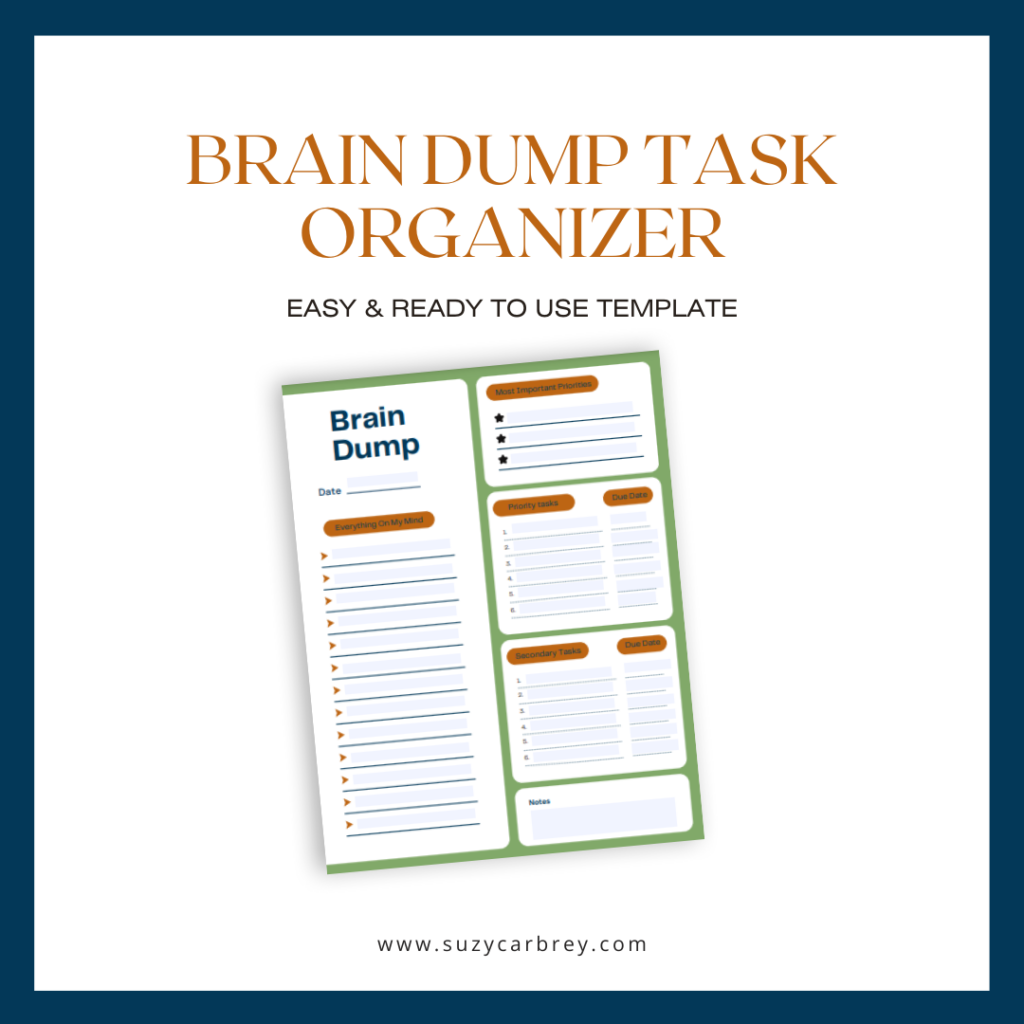
Alongside that, a lot of my clients keep a weekly brain dump. Throughout the week, anything that surfaces goes onto it. The grocery thing, the email you remembered at a red light, the project idea that popped up mid-shower. It all has somewhere to go. The point is to get it out of your head and off your daily view, into one trusted spot you’ll actually look at when it’s time. Your working list stops being a thirty-item monument to everything undone, because everything that isn’t for today is living somewhere else.
Pull two at a time
Here’s the practice I build with people from there, and it’s the part that changes how the whole day feels.
Each day, instead of facing the full list, you pull out your 2-dos. That’s the number two, not the word. Two items. The two that are most urgent and important right now, drawn out of the brain dump and set in front of you on their own. That’s all you focus on. Not the other twenty-eight. Just those two.
You get them done. You feel the accomplishment, because for once finishing actually registers instead of disappearing into a sea of unchecked boxes. And then, if you still have time and energy, you pull the next two. If you don’t, you’ve still finished what you set out to do, which means the day ends in a win instead of a deficit.
The reason this works isn’t that two is a magic number. It’s that you can see and feel the accomplishment a couple of things at a time, and that feeling is the fuel for the next couple. The long list buries the win. Pulling two surfaces it. You’re building momentum out of completion instead of grinding against a list designed to make completion invisible.
When deciding what to pull is the part that stalls you
For some people, the moment they go to pick their two, everything jams. Every task suddenly feels equally important, and choosing between them becomes its own overwhelming task, so they end up doing none of it. If that’s you, the issue isn’t the list anymore. It’s the deciding.
When a client gets stuck there, my suggestion is simple: use a randomizer. Put the contenders in, let it pick, and go. It sounds almost too easy, and that’s the point. Most of these tasks need to get done regardless of the order. The agonizing over which one first usually adds nothing except more time spent not starting. Letting something else make the call takes the decision off your plate and gets you moving, and moving is the thing that was actually stuck. You can always reorder later if the randomizer hands you something genuinely impossible for right now. The goal is to break the standstill, not to find the perfect sequence.
Building a list that gives instead of takes
A list should lower your mental load, help you see what matters, and leave you readier to act, not heavier. If yours reliably produces anxiety, guilt, or that defeated feeling, the amount it’s holding in front of you is worth reconsidering.
The shape that tends to work isn’t one giant master list. It’s a few separated pieces doing different jobs. A later list and a weekly brain dump to hold everything that isn’t for today, so none of it gets lost and none of it sits in your way. A short daily focus of two things you’ve pulled out deliberately. And a tiebreaker, like a randomizer, for the moments when choosing is what’s stopping you. The specific tools matter less than the result: a system that puts a small, finishable amount in front of you and keeps the rest out of sight until it’s actually time for it.
The bottom line
If your list leaves you exhausted and defeated, it’s worth asking whether the work is the whole story or whether the list itself is part of the weight. A long list doesn’t just track what’s undone. It shows it to you, all of it, every time you look, and it makes finishing things feel like almost nothing while making falling behind feel like everything.
You don’t fix that by pushing harder against the list. You fix it by changing what the list puts in front of you.
- Get the rest into a later list and a brain dump where it’s safe but out of view.
- Pull two things at a time so you can actually feel yourself finishing.
- And when choosing is the part that stops you, let a randomizer choose so you can start.
Most people don’t need to get through their list faster. They need a list that lets them feel like they’re getting somewhere, because that feeling is what carries them to the next thing.
A few common questions
Why does my to-do list make me feel worse, not better?
A list longer than you can finish stops holding things for you and starts showing you everything undone. Every time you look, your brain processes all of it and you feel responsible for all of it, which drains energy even when you haven’t worked on anything.
What’s a “2-do”?
It’s the two tasks, the number two, that you pull out of your bigger list to focus on for the day. You finish those two, feel the accomplishment, and only then pull the next two if you have time and energy. The point is to feel progress a couple of things at a time instead of facing the whole list at once.
Where do all the other tasks go?
Onto a later list and a weekly brain dump. You still capture everything, so nothing gets lost and you don’t have to hold it in your head, but it stays out of your daily view until it’s actually relevant.
What if I can’t decide which tasks to pull?
If choosing is the thing that stalls you, use a randomizer. Most of the tasks need doing regardless of order, and the time spent agonizing over the sequence usually just keeps you from starting. Letting something else pick gets you moving.
Executive Functioning and ADHD Coaching
I'm an ADHD and executive function coach and a certified organizational specialist, trained in Solution-Focused Brief Therapy and the Seeing My Time executive functioning curriculum. For five years I worked as a speech-language pathologist in adult medical rehabilitation, providing cognitive communication therapy. That background is what I bring to coaching.
Coaching happens online, which most of my clients prefer for the convenience and the privacy. Wherever you are, we can work together.
All services provided by Suzy Carbrey LLC are coaching, not clinical evaluation or treatment. I am a licensed speech-language pathologist, and that background shapes how I coach, but coaching is not speech therapy. If you're looking for a formal evaluation or treatment, let me know and I can refer you to a qualified clinician.