

The short version
Professional organizer Dana K. White built her whole decluttering method around one idea: your space is a container, and the container is the actual limit, not your willpower or your organizational skill. If it doesn’t fit, you have too much stuff, full stop. The same math applies to time. Your day is a container too, and it holds a fixed number of hours whether or not your to-do list agrees. For an ADHD brain, that container is unusually easy to overfill, not from poor planning, but because of a well-documented pattern called time blindness, which makes it genuinely hard to feel how much a day can actually hold before you’ve already overcommitted it.
What is the container concept, and why does it matter for ADHD?
The container concept says a space only holds what fits in it, and the fix for overflow is never a bigger container. It’s deciding what actually belongs inside the one you have.
Dana K. White developed this for physical clutter: a drawer, a shelf, a closet. If your tablecloths don’t fit the tablecloth drawer, the answer isn’t a second drawer. It’s fewer tablecloths. The insight that makes this useful for ADHD brains specifically is what it removes: the endless, exhausting question of whether something is “worth keeping.” The container answers that question for you. It fits, or it doesn’t.
Time works exactly the same way, and it matters more here, because unlike a shelf, a day doesn’t sit still and let you measure it. You have to estimate how much it holds while you’re still filling it, which is exactly where an ADHD brain runs into trouble.
Why do ADHD brains fill the container past capacity almost every time?
Because of time blindness, a well-documented pattern where the brain has trouble sensing time that hasn’t happened yet, which makes it hard to feel a day’s real capacity until it’s already been exceeded.
Psychiatrist Russell Barkley describes ADHD time perception as collapsing into just two categories: now, and not now. Anything not happening this minute is harder for the brain to weigh accurately, including how long it will actually take once it arrives. That’s the mechanism behind the planning fallacy familiar to anyone with ADHD: a task reliably takes longer than you estimated. That’s not a math problem. It’s that your brain was never given an accurate internal clock to measure against in the first place.
Layer a second factor on top of that. Many ADHD brains, especially in high-achieving adults, treat a full container as a personal challenge rather than a limit. If the day theoretically has sixteen waking hours, the instinct is to find sixteen hours of things worth doing, the same way Dana White’s readers used to buy a second bin instead of admitting the first one was full.
What happens when the day's container overflows?
It gets read as a character problem instead of a math problem, which is where the real damage happens.
A missed pickup, a dropped commitment, an unanswered email at 9pm are not usually evidence that you don’t care enough or try hard enough. They’re usually evidence that more got put into the container than it holds, and something was always going to spill. The container concept exists specifically to interrupt that misreading. It’s the same reframe that matters when a system collapse gets filed as a character flaw rather than a situational misfire: the day didn’t overflow because you failed it. It overflowed because it was never going to hold that much in the first place.
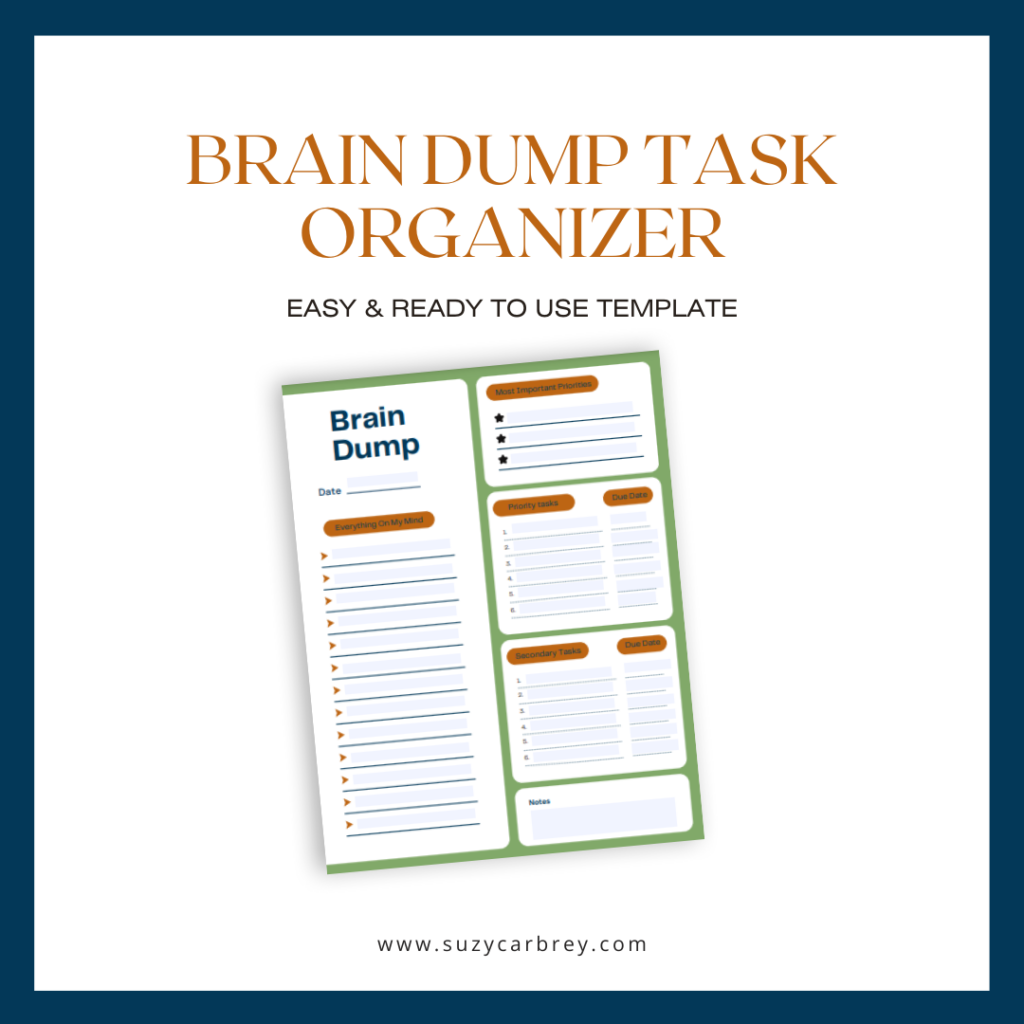
Executive functioning coaching, body doubling, and tools all in one place
Why does the container's capacity change depending on the season?
Because the day itself doesn’t just hold your to-do list. It holds your energy, your sleep, your stress load, and your current circumstances, and all of those change.

A day that comfortably held a full schedule last spring might genuinely hold less this season. You haven’t gotten worse at managing time. The actual container shrank. This is the same reason a seasonal audit of your systems matters for objects and routines. It matters for your calendar too. Treating your day’s capacity as fixed, the same every season regardless of what else is happening in your life, is how a schedule that used to fit stops fitting and gets misread as a personal failure instead of an outdated estimate.
How do you actually use the container concept instead of fighting it?
The same way Dana White uses it for physical stuff: before adding something, name what has to come out to make room.
That single question does most of the work. It replaces the vague feeling of being too busy with a concrete decision: if this goes in, what comes out. Some days the honest answer is nothing goes in, because the container is already full of things that matter more. That’s not a failure to manage your time. That’s the container doing exactly what it’s supposed to do.
The bottom line
Your day is a container with a real limit, the same way a drawer or a shelf is, and ADHD time blindness makes it unusually hard to feel where that limit is before you’ve already gone past it. The fix was never a better planner or more willpower. It’s treating a full day the way Dana White treats a full drawer: not a personal failure, just proof that something has to come out before something new goes in.
Try this
Before you add one new thing to tomorrow’s schedule, whether it’s a commitment, an errand, or a task, say out loud what has to come out to make room for it. Most days, naming the trade honestly is enough to tell you whether the new thing actually belongs there, or whether the day was already full.
FAQ
Is the container concept the same as time blocking?
No. Time blocking assumes you already know how much time you have and just need to assign it. The container concept comes first: it’s what tells you the actual limit before you start assigning anything to it.
Does the container concept mean I have to give something up every time I add something new?
In practice, yes, since the day doesn’t expand. The something you give up might be small, ten minutes of scrolling instead of a whole commitment, but the one-in-one-out principle holds even at that scale.
Why does this feel harder for ADHD brains than it seems to for other people?
Because time blindness makes the container’s actual size hard to sense in advance. Someone without that pattern can usually feel a day filling up before it overflows. An ADHD brain often can’t feel it until the overflow has already happened.
Can the container ever get bigger?
Not really, though what fits inside it can get more efficient. The size of a day is fixed. What changes season to season is how much of that fixed size is available after accounting for your energy, sleep, and circumstances.
How is a container overflowing different from me just being bad at time management?
A container overflowing means more was asked of the day than the day can hold, which is a math problem. Being bad at time management implies a skill you’re missing. Most of the time, the real issue is the first one, and it gets mistaken for the second.
Executive Functioning and ADHD Coaching
I'm an ADHD and executive function coach and a certified organizational specialist, trained in Solution-Focused Brief Therapy and the Seeing My Time executive functioning curriculum. For five years I worked as a speech-language pathologist in adult medical rehabilitation, providing cognitive communication therapy. That background is what I bring to coaching.
Coaching happens online, which most of my clients prefer for the convenience and the privacy. Wherever you are, we can work together.
All services provided by Suzy Carbrey LLC are coaching, not clinical evaluation or treatment. I am a licensed speech-language pathologist, and that background shapes how I coach, but coaching is not speech therapy. If you're looking for a formal evaluation or treatment, let me know and I can refer you to a qualified clinician.