The short version
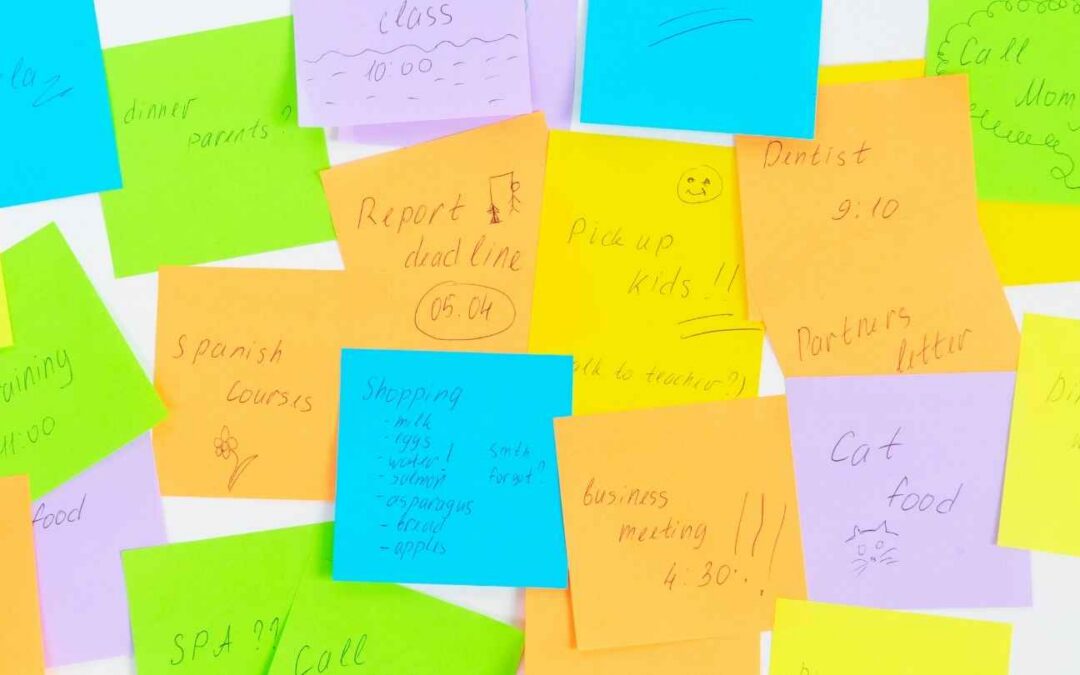
An open loop is any unfinished task or unresolved decision your brain is still holding onto: the email you haven’t answered, the appointment you haven’t booked, the conversation you’ve been meaning to have. Closing a loop doesn’t mean finishing the task. It means getting it out of your head and into a place you trust, and that can happen in seconds. You don’t need a few hours and a ranking system to do this. You need small, repeatable catches built into the transitions you already have in your day.
What are open loops, and why do they drain ADHD brains?
An open loop is anything unfinished that your brain is still actively tracking, and tracking it costs real mental energy even when you’re not thinking about it directly.

This has a name in psychology: the Zeigarnik effect. In the 1920s, psychologist Bluma Zeigarnik, working with her mentor Kurt Lewin, noticed that waiters in a Berlin cafe could recall a table’s entire order in vivid detail while the tab was still open, and then forget it almost completely the moment it was paid. Zeigarnik took that observation into the lab and found the same pattern held up: people remember interrupted, unfinished tasks far better than ones they’ve actually completed.
For an ADHD brain, this isn’t a minor background hum. Working memory is already one of the more taxed systems, so every open loop is competing for space that’s already limited. String together a dozen small unresolved things and you get the familiar feeling of being scattered without being able to point to any one reason why.
Does closing an open loop mean finishing the task?
No. It means moving the task out of your head and into a place you trust enough to stop actively tracking it, and there’s real research behind that distinction.
Decades after Zeigarnik’s original work, researchers Masicampo and Baumeister followed up on it directly. They found that unfinished goals caused measurable interference: intrusive thoughts during unrelated tasks, goal-related words staying more mentally “loud,” and worse performance on other tasks entirely. But when participants were given the chance to write a specific plan for when, where, and how they’d follow through, that interference disappeared, even though the task itself was still undone. The brain didn’t need the goal completed. It needed a specific plan it could trust enough to stop rehearsing.
That’s the part most loop-closing advice gets wrong. Closing a loop and completing a task get treated as the same thing, which makes it sound like real relief requires hours of actual work. It doesn’t. A trusted capture, not the finished task, is what turns off the mental tracking.
That distinction is what makes this a day-to-day habit instead of a project.
Do you need a big reset to close your open loops?
No. Some systems ask you to block off a few hours, brain-dump everything, rank it by importance and urgency, and sort it into master lists before you’re allowed to feel any relief. That can work as an occasional deep reset, but it isn’t something you can realistically do daily, and treating it as the only real way to close loops means most days you’re not closing any.
The day-to-day version is smaller and constant instead of occasional and large. It happens in the moments you already have, not in a block you have to find.
What does closing loops day-to-day actually look like?
It looks like catching a loop the moment it appears and moving it somewhere trusted before it has a chance to settle into working memory.
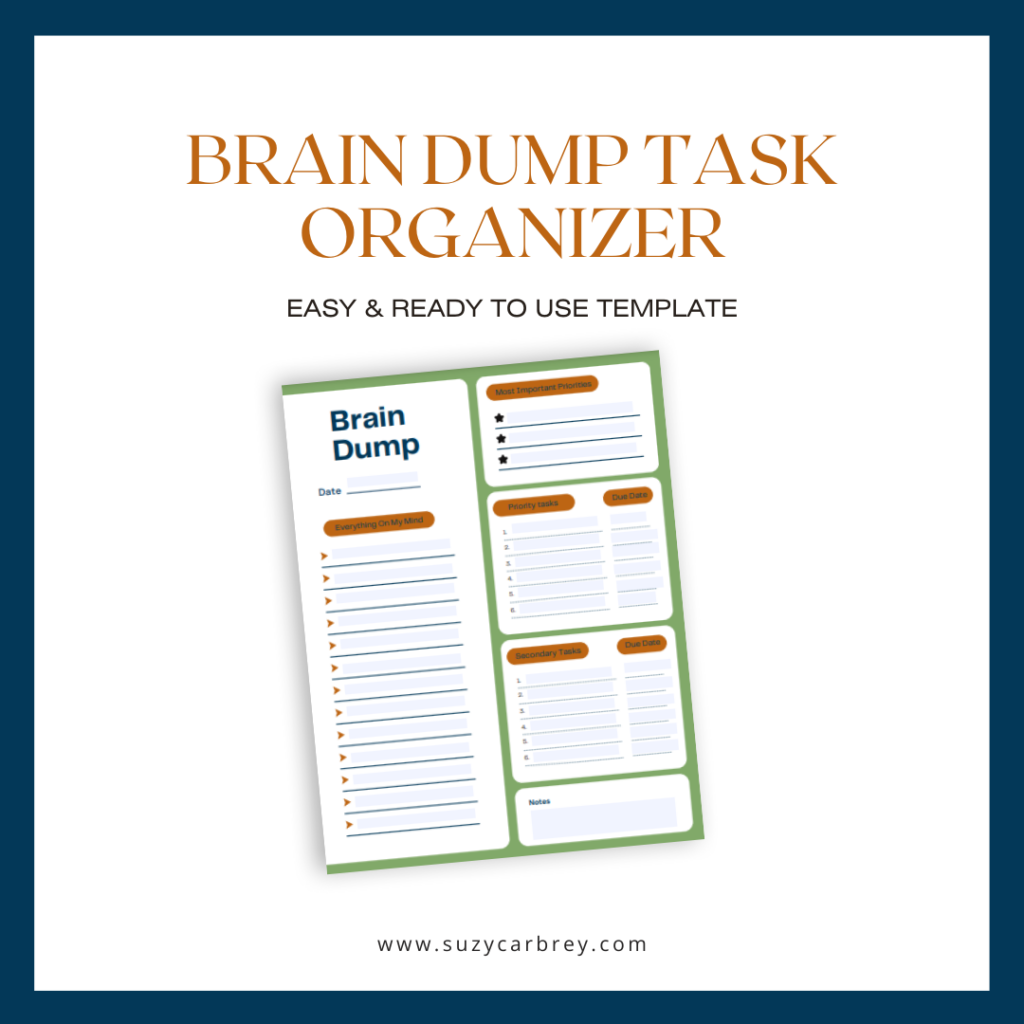
Use your existing transitions. Walking to get coffee, waiting for a page to load, standing in line, the two minutes between meetings. These small in-between moments are enough time to capture a loop, even if you don’t have time to close it in the finishing sense. A voice memo, a note in your phone, one line on the weekly brain dump list you’re already keeping. The capture is the win. It doesn’t need to be organized in the moment.
If something genuinely takes less than two minutes to actually finish, right then, go ahead and do it instead of capturing it. That’s a real shortcut, and if you want a deeper toolkit for clearing an existing backlog of these small tasks, I’ve written about that separately. But most open loops aren’t two-minute tasks, and trying to finish them on the spot is exactly what turns a quick catch into something you avoid starting at all.
For anything bigger than two minutes, the capture is enough for now. It goes on the weekly brain dump, or moves straight to the later list if it’s not relevant to this week. You’re not deciding what to do with it yet. You’re just getting it out of your head and into a place you already trust to hold it, so you can pull it out later when you’re actually ready to work on it.
What if you don't have a trusted place yet?
Build one before you need it, not in the middle of a stressful moment.
It doesn’t need to be complicated. A running note in your phone, a small notebook you keep in the same spot, a weekly brain dump list. What matters is that it’s the same place every time, so capturing a loop takes no decision-making of its own. The moment you have to think about where something goes, the capture gets harder, and a harder capture is a capture that stops happening.
The bottom line
An open loop drains you because it stays active in working memory until your brain trusts it’s been handled somewhere else, not because the task itself is necessarily urgent or even large. Closing a loop means capturing it, not finishing it. That’s what makes this a habit you can build into transitions you already have throughout the day, a few seconds at a time, instead of a reset you have to schedule and rarely get to.
Try this
For one day, notice the small in-between moments you already have (walking somewhere, waiting for something to load) and use just one of them to capture a loop that’s been sitting in your head. Don’t try to solve it. Just get it out and into your trusted place, and notice what changes.
A few common questions
What is the Zeigarnik effect?
It’s the tendency for the brain to hold onto unfinished tasks far more actively than finished ones. It’s named after psychologist Bluma Zeigarnik, who noticed that waiters remembered open orders vividly and forgot them almost completely once the bill was paid, then confirmed the pattern in formal lab studies.
Why do unfinished tasks stress me out more than the actual work would take?
Because the stress comes from your brain actively tracking something as unresolved, not from the size of the task itself. A one-minute task left open can feel just as loud as a much bigger one.
Is a to-do list the same thing as closing open loops?
Not quite. A to-do list is often still a plan for action. Closing a loop can happen before you’ve decided anything about the task at all. The relief comes from capturing it somewhere trusted, not from planning it.
How many open loops is too many?
There’s no fixed number. The more useful question is whether you have a trusted place you’re actually using to capture them as they come up. Without one, even a small number of open loops can feel overwhelming.
Can closing loops become its own open loop?
It can, if the system for capturing them is complicated enough that you avoid using it. Keep the trusted place simple and always in the same spot so capturing something takes no extra thought.
Executive Functioning and ADHD Coaching
I'm an ADHD and executive function coach and a certified organizational specialist, trained in Solution-Focused Brief Therapy and the Seeing My Time executive functioning curriculum. For five years I worked as a speech-language pathologist in adult medical rehabilitation, providing cognitive communication therapy. That background is what I bring to coaching.
Coaching happens online, which most of my clients prefer for the convenience and the privacy. Wherever you are, we can work together.
All services provided by Suzy Carbrey LLC are coaching, not clinical evaluation or treatment. I am a licensed speech-language pathologist, and that background shapes how I coach, but coaching is not speech therapy. If you're looking for a formal evaluation or treatment, let me know and I can refer you to a qualified clinician.